
Abu Dhabi CCTV Regulations: Practical Guide For Business (Including MCC CCTV Requirements)
Abu Dhabi CCTV Regulations: Practical Guide For Business (Including MCC CCTV Requirements) If you’re planning to install or upgrade a CCTV system, understanding Abu Dhabi CCTV regulations is one of the smartest decisions you can make before investing in equipment or installation. Many businesses only start thinking about compliance after cameras are already installed, which often leads to unnecessary rework, approval delays, and additional costs.
This guide is written for business owners, facility managers, office administrators, and project stakeholders who want clarity not technical jargon. It explains how CCTV compliance typically works in Abu Dhabi, what authorities usually expect, and how to avoid common mistakes that slow projects down.
We will also cover Abu Dhabi MCC CCTV regulations, as municipal compliance frequently comes into play for commercial buildings, retail fit-outs, and regulated projects. Whether you’re planning a new installation or reviewing an existing system, this article will help you approach CCTV the right way from the start.
For regulated CCTV installations, it’s essential to choose companies that are not only compliant with MCC standards, but also part of the official ADMCC approved companies in Abu Dhabi, ensuring authority inspection success.
Why Abu Dhabi CCTV Regulations Matter for Your Business?
CCTV is not just about installing cameras on walls. In Abu Dhabi, CCTV systems are often part of a wider safety, operations, and compliance environment. A well-planned and compliant system protects your business in several important ways.
First, it improves operational security. Proper camera placement and recording ensure incidents are captured clearly and footage is usable when needed. Second, it supports risk management by reducing liability through responsible coverage and controlled access to recordings.
Compliance also plays a role in project approvals. Many businesses experience delays because CCTV systems were installed without proper planning or documentation. Finally, following regulations ensures professional standards, meaning your system looks clean, organized, and reliable not rushed or improvised.
When businesses ignore Abu Dhabi CCTV regulations, the issue is rarely a fine. More often, it’s failed inspections, missing documents, or the need to relocate cameras and redesign storage policies after installation.
Quick Overview: What “Compliance” Usually Includes
When people search for Abu Dhabi CCTV regulations, they are usually trying to answer very practical questions:
What are the expected rules for CCTV in commercial facilities?
Where can cameras be installed—and where should they not be?
How long should footage be retained?
Who is allowed to access CCTV recordings?
What documentation should be prepared?
While requirements can vary depending on the type of facility, compliance discussions typically include the following areas:
Camera placement and coverage (entrances, exits, perimeters, critical zones)
Privacy considerations (avoiding unnecessary coverage of private areas)
Recording and retention (how footage is stored and for how long)
Access control (who can view, export, or manage recordings)
System reliability (storage stability, power backup, network quality)
Documentation (camera lists, layouts, policies, and handover records)
Planning with these points in mind makes CCTV systems easier to approve, easier to manage, and far more effective long-term.
Abu Dhabi MCC CCTV Regulations: What They Usually Mean in Projects?
Many users specifically search for Abu Dhabi MCC CCTV regulations when they are involved in commercial or municipal projects. This often includes:
Commercial buildings and office fit-outs
Retail spaces in regulated zones
Projects requiring municipal review or approvals
Sites where documentation and drawings are requested
In practical terms, searches related to MCC CCTV regulations usually indicate that the project requires structured planning and proper documentation, not guesswork.
What this means for your CCTV project:
Treat MCC-related requirements as a signal to prepare early
Ensure camera layouts, storage plans, and access policies are documented
Work with installers who can provide drawings, schedules, and clean handovers
Important: Do not assume that a setup used in another building will automatically be acceptable. Different sites trigger different requirements. Designing your CCTV system to professional standards and maintaining clear documentation is the safest approach.
Who Should Follow Abu Dhabi CCTV Regulations?
Camera Placement Rules: How to Think About It Correctly?
One of the most common misunderstandings is camera placement. Many assume that installing more cameras automatically improves compliance. In reality, correct placement matters more than quantity.
To comply with Abu Dhabi CCTV regulations, systems must be designed and installed by qualified professionals who understand ADMCC requirements, correct camera positioning, retention policies, and compliance documentation.
Professional CCTV camera installation in Abu Dhabi ensures that all regulatory and technical requirements are met from day one.
Even small offices sometimes assume compliance does not apply to them. In reality, CCTV expectations can still be relevant depending on the building type and business activity.
CCTV compliance commonly applies to:
Offices and corporate facilities
Warehouses and industrial sites
Retail stores and showrooms
Clinics and regulated services
Hotels and hospitality venues
Schools and educational facilities
Mixed-use buildings and property-managed sites
If your premises involve public access, staff access control, sensitive areas, or asset protection, you should treat CCTV compliance seriously..
What compliant placement aims to achieve:
Clear coverage of entry and exit points
Visibility of critical areas such as reception, corridors, loading bays, and stock rooms
Monitoring of perimeters and access routes
- Recording of incident-prone zones without blind spots
Common placement mistakes:
Cameras pointing into private or sensitive areas unnecessarily
Cameras mounted too high, making faces unrecognizable
Poor angles causing glare or backlighting
Random placement without a coverage plan
Ignoring night-time lighting conditions
Missing entrances due to overreliance on one camera
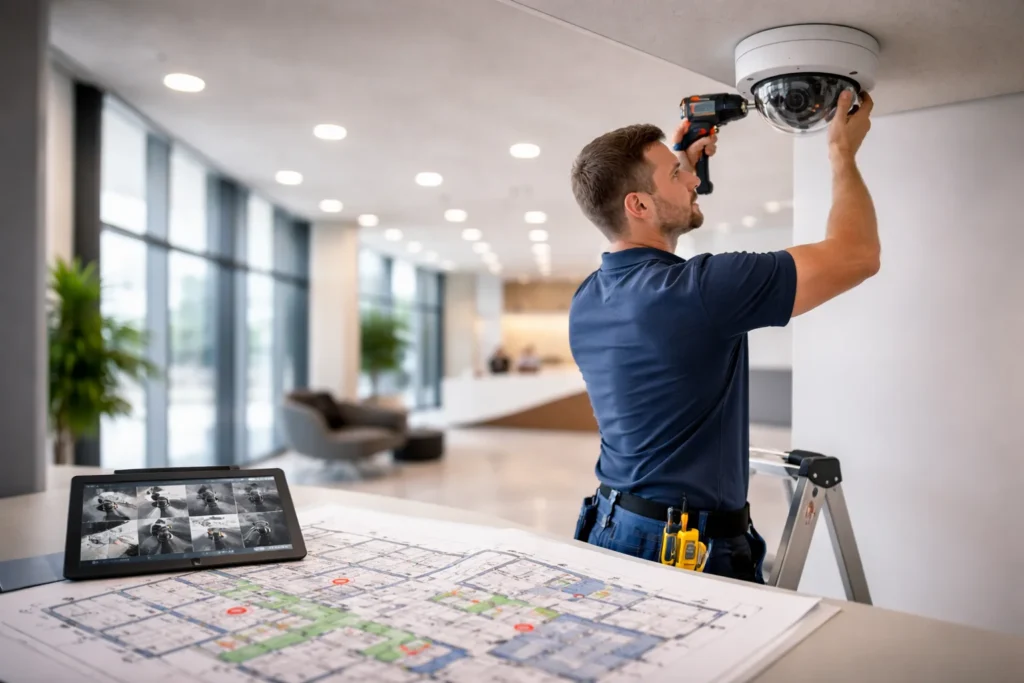
A professional installer will create a coverage plan, verify angles on site, and test footage quality before final handover.
Storage and Retention: The Most Asked Question
Cameras pointing into private or sensitive areas unnecessarily
Cameras mounted too high, making faces unrecognizable
Poor angles causing glare or backlighting
Random placement without a coverage plan
Ignoring night-time lighting conditions
Missing entrances due to overreliance on one camera
A professional installer will create a coverage plan, verify angles on site, and test footage quality before final handover.
A strong retention policy includes:
Cameras pointing into private or sensitive areas unnecessarily
Cameras mounted too high, making faces unrecognizable
Poor angles causing glare or backlighting
Random placement without a coverage plan
Ignoring night-time lighting conditions
Missing entrances due to overreliance on one camera
A professional installer will create a coverage plan, verify angles on site, and test footage quality before final handover.
Why cheap storage becomes expensive later:
Footage overwritten too quickly
Dropped recordings during high activity
Performance issues and system crashes
Hard drive failures due to overload
Designing storage properly from day one prevents these issues.
Access Control and Privacy: What Businesses Should Implement
A CCTV system is only compliant if access to footage is properly controlled. Poor access practices can turn CCTV from a security tool into a liability.
Best Practices:
Role-based access (admin vs viewer)
Limited credentials for authorized personnel
Immediate password changes from defaults
Access logs for accountability
Secure remote access methods
Privacy-safe approach:
Avoid unnecessary coverage of private areas
Use signage where required
Control footage export and sharing
This aligns well with the intent behind Abu Dhabi CCTV regulations and supports professional operations.
How to Choose a CCTV Company That Understands Regulations
Choosing the right service provider plays a major role in meeting Abu Dhabi CCTV regulations. Not all vendors are familiar with ADMCC requirements, approval workflows, and post-installation compliance audits.
Working with trusted CCTV companies in Abu Dhabi that understand ADMCC approval processes, compliance audits, and post-installation requirements helps organizations avoid regulatory violations, delays, and costly rework.
Instead of asking who is “the best,” focus on how a company works.
Ask your installer:
Do you provide camera layouts and documentation?
Do you test footage day and night?
Do you size storage based on retention needs?
Do you offer maintenance support?
Can you assist with compliance documentation?
FAQs About Abu Dhabi CCTV Regulations
Do small offices in Abu Dhabi need CCTV compliance?
If your office is in a commercial building or has public access, compliance expectations may still apply. Following professional standards and maintaining documentation is the safest approach.
What do Abu Dhabi MCC CCTV regulations usually require?
In most projects, MCC-related requirements focus on planning, documentation, and professional execution rather than hidden rules.
Can CCTV footage be stored in the cloud?
Cloud storage can be used when implemented securely with controlled access and reliable connectivity. Many businesses choose hybrid storage.
Conclusion
Build It Once, Build It Right
Following Abu Dhabi CCTV regulations is not about making CCTV complicated it’s about making it correct from the start. A properly planned system avoids rework, improves reliability, and supports long-term operations.
If your project involves approvals or commercial fit-outs, understanding Abu Dhabi MCC CCTV regulations can save time and prevent costly changes. When CCTV is installed properly, it becomes a long-term operational asset not a recurring problem.
If you’re planning a new CCTV system or upgrading an existing one, explore our CCTV installation services in Abu Dhabi to ensure your setup is fully compliant and professionally designed.