

Why Does CCTV Installation Fail Approval in Abu Dhabi?
Abu Dhabi CCTV regulations play a critical role in determining whether a CCTV system receives approval or faces rejection. CCTV installation in Abu Dhabi is not just a technical task, it is a compliance-driven process that requires correct planning, documentation, and execution.

How Abu Dhabi CCTV Regulations Affect Approval Outcomes
One of the most common misconceptions is that CCTV approval is guaranteed once cameras are installed. In Abu Dhabi, approval is a verification process, not a formality. Authorities evaluate whether a CCTV system meets defined operational, technical, and documentation requirements before accepting it as compliant.
Approval reviews typically assess:
Whether camera coverage is adequate and purposeful
If recorded footage meets usability standards
Whether storage and retention are correctly calculated
If system documentation matches the actual installation
When any of these elements fall short, approval may be delayed or denied. In some cases, systems must be partially redesigned or reinstalled, resulting in unexpected costs and project setbacks.
Common CCTV Compliance Mistakes That Lead to Rejection
According to official Abu Dhabi surveillance and security guidelines, CCTV systems must meet defined technical and compliance standards before approval.
Approval failures often follow predictable patterns. Understanding these mistakes early helps organizations avoid them entirely:
1. Incorrect Camera Coverage and Placement
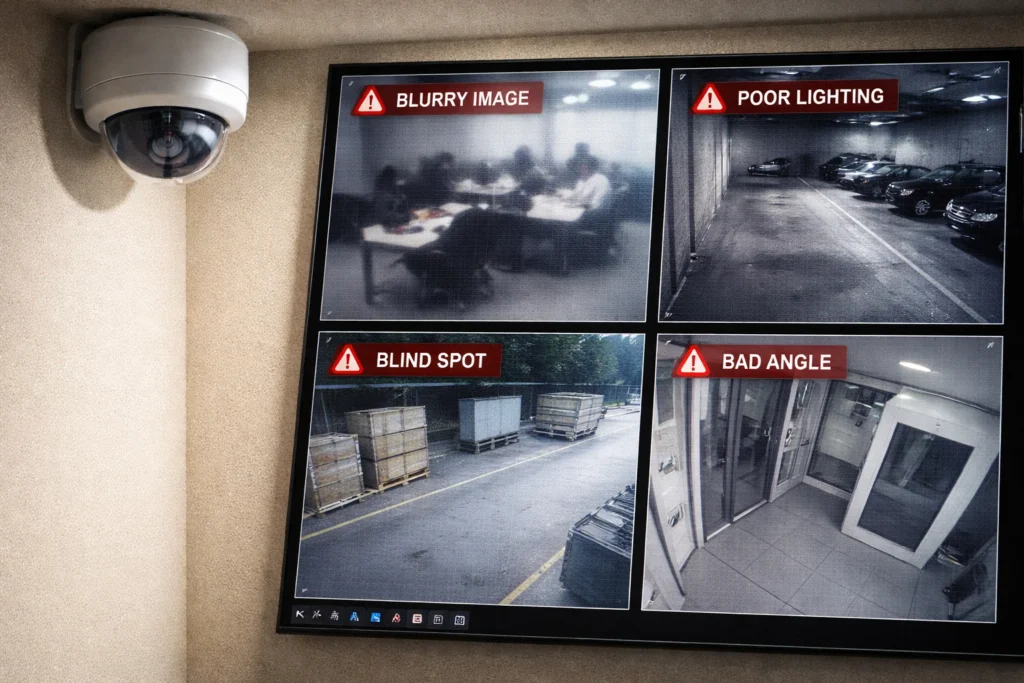
A frequent cause of rejection is improper camera placement. Many installations prioritize quantity over coverage quality. Cameras may be installed too high, too wide, or at angles that fail to capture usable footage.
Common issues include:
Blind spots in critical areas
Poor coverage of entry and exit points
Cameras installed without considering lighting conditions
Overlapping views that add no real value
Authorities expect camera placement to be intentional, justified, and aligned with surveillance objectives, not randomly distributed.
2. Inadequate Recording Quality and Configuration
Even when cameras are correctly positioned, approval may fail if recording quality does not meet expectations. Footage must remain clear under varying conditions, including low light and night operation.
Typical configuration issues include:
Low resolution settings
Improper frame rates
Poor night-time visibility
Compression settings that degrade image quality
Approval reviewers assess whether recorded footage can actually serve security, monitoring, and incident review purposes.
Documentation Gaps That Delay CCTV Approval
Documentation is one of the most overlooked elements of CCTV compliance. Many systems fail approval not because of hardware issues, but due to missing or inconsistent documentation.
Required documents often include:
Camera layout drawings
System architecture diagrams
Equipment specifications
Storage and retention calculations
Network topology overviews
When submitted documentation does not match the installed system, approval reviewers may request clarification, corrections, or resubmission. This creates delays that could have been avoided with proper preparation.
Lack of Regulatory Awareness During Planning
CCTV approval issues frequently originate during the planning phase. When systems are designed without considering local regulatory expectations, compliance problems surface later during inspection.
Effective planning requires understanding how CCTV compliance requirements in Abu Dhabi influence:
Camera coverage logic
Storage policies
Monitoring readiness
Integration with other security systems
How Professional Planning Prevents CCTV Approval Failures
Understanding Abu Dhabi CCTV regulations early in the project lifecycle helps organizations avoid approval delays and unnecessary system redesign.
CCTV approval success is rarely accidental. It results from structured design, correct installation, and compliance-focused execution. In practice, professional CCTV installation in Abu Dhabi ensures that each system element supports approval requirements rather than conflicting with them.
.Key benefits of compliance-aware planning include:
Reduced inspection findings
Fewer revision requests
Faster approval timelines
Lower risk of rework
Why Approval Issues Are Often Linked to Non-Compliant Vendors
Many approval failures can be traced back to vendors who lack experience with regulated projects. While basic CCTV installation skills may be sufficient for small deployments, working with MCC-approved companies in Abu Dhabi becomes critical in regulated environments that demand compliance knowledge, documentation discipline, and coordination capability.
Non-compliant vendors often:
Focus only on hardware installation
Ignore documentation requirements
Misinterpret approval expectations
React to issues instead of preventing them

Preventing CCTV Approval Rejection Starts With the Right Approach
CCTV approval failures in Abu Dhabi are rarely caused by a single issue. They result from a combination of planning gaps, configuration mistakes, and compliance oversights. The good news is that most of these problems are entirely preventable.
By aligning system design with regulatory expectations, preparing accurate documentation, and selecting experienced installers, organizations can move through approval processes smoothly and confidently.
Conclusion: Avoid Rejection by Designing for Approval From Day One
CCTV systems in Abu Dhabi must do more than record footage, they must meet approval expectations that protect infrastructure, data, and operational integrity. Approval failures lead to delays, additional costs, and unnecessary disruption.
Organizations that treat compliance as part of system design, not an afterthought, avoid these challenges entirely. With the right planning, documentation, and execution strategy, CCTV approval becomes a predictable outcome rather than a risk.