
How Many CCTV Cameras Does My Business Need in Abu Dhabi?
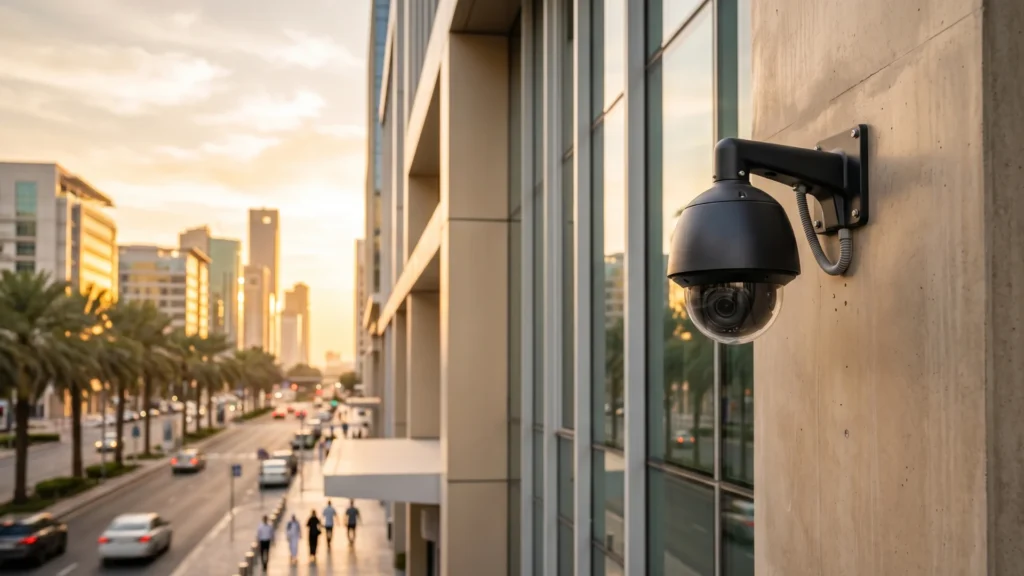
If you are a business owner in Abu Dhabi, you have probably asked this question before: how many CCTV cameras does my business actually need? Whether you are opening a new commercial space, renewing a trade license, or preparing for an ADMCC inspection, getting your CCTV setup right is not optional. It is a legal and operational requirement.
The honest answer is: how many CCTV cameras your Abu Dhabi business needs depends on several factors, including your building type, floor area, entry points, and the specific ADMCC guidelines that apply to your sector, including your building type, floor area, entry points, and the specific ADMCC guidelines that apply to your sector.
In this guide, we break down exactly how to calculate the right number of cameras for your facility, what the ADMCC requires, and how to avoid the most common and costly mistakes businesses make when planning a CCTV system.
Why the Number of CCTV Cameras Matters for ADMCC Compliance?
Before we get into the numbers, it is important to understand why this question matters so much in Abu Dhabi specifically.
The Abu Dhabi Monitoring and Control Center, known as ADMCC, enforces strict CCTV regulations across commercial, retail, industrial, and institutional properties. If your system does not meet their requirements, your business will face serious consequences: failed inspections, rejected trade license renewals, and a reinstallation bill entirely at your expense.
Getting the number wrong in either direction creates real problems. Too few cameras means gaps in coverage, which ADMCC inspectors will flag immediately. Too many cameras installed incorrectly can also raise concerns around placement compliance, storage requirements, and image resolution standards.
A proper CCTV plan, designed by an ADMCC approved company in Abu Dhabi, takes all of this into account from day one.
For a full overview of the legal framework, read our detailed guide on Abu Dhabi CCTV regulations.
What Does ADMCC Actually Require?

Mandatory Coverage Zone
ADMCC expects full camera coverage across the following areas in every commercial property:
All entry and exit points, including main doors, fire exits, and service entrances. Reception areas and public-facing counters. Car parks and vehicle access points. Cash handling and point-of-sale areas. Storage rooms and server rooms where applicable. Corridors connecting operational zones.
The key principle is simple: every area of public or staff movement needs full camera coverage with zero blind spots. ADMCC inspectors walk through your premises during an inspection and physically verify that the live camera feed covers every zone on their checklist.
Minimum Camera Specifications
.In addition to quantity, ADMCC requires cameras to meet minimum technical standards. These include a minimum resolution of 2 megapixels for general surveillance, higher resolution at entry and exit points where facial identification matters, and night vision or infrared capability for areas that run after dark.
The international IEC 62676 CCTV standards govern image quality, storage formats, and system integrity across professional surveillance systems, and ADMCC requirements align with them
Storage and Retention Requirements
ADMCC requires a minimum of 30 days of continuous video retention for most commercial properties. Higher-risk facilities such as banks, exchanges, and government-adjacent businesses may be required to retain footage for longer periods. Your storage capacity must support the resolution and frame rate of all cameras running simultaneously without gaps.
How Many CCTV Cameras Does a Business Need in Abu Dhabi?
This is the core question, and the answer varies by property type. Below is a practical breakdown based on the types of businesses we install CCTV systems for across Abu Dhabi.
How Many CCTV Cameras for Small Retail Shops and Offices in Abu Dhabi
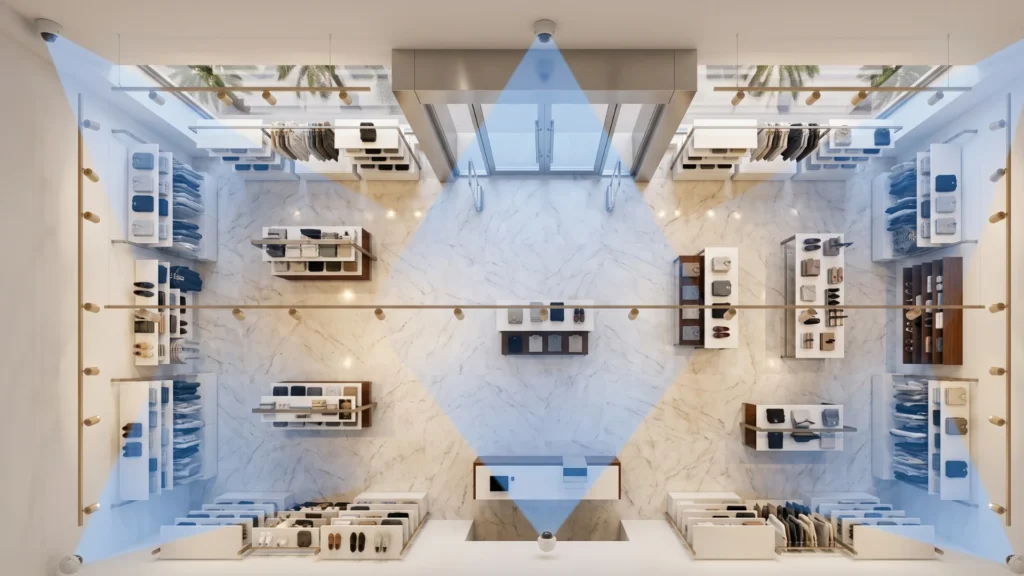
For a small retail unit, salon, small office, or kiosk, a typical ADMCC-compliant setup requires between 4 and 8 cameras. This typically covers the main entrance, the sales floor, the back office or storage area, and the exterior facade if it faces a public space.
Even in a small space, placement matters more than quantity. A wide-angle camera placed incorrectly at the door will still leave blind spots that fail an inspection.
Medium Commercial Properties (100 to 500 Square Meters)
A medium-sized business such as a restaurant, clinic, showroom, or multi-room office typically requires between 8 and 16 cameras. At this scale, you will need dedicated cameras for each functional zone, separate coverage for any outdoor areas, and at least one camera dedicated to the point of payment or reception.
Large Commercial and Mixed-Use Properties (500 Square Metres and Above)
Larger facilities such as hotels, hospitals, malls, warehouses, and corporate headquarters require a custom camera count, typically starting from 20 cameras and scaling significantly from there. At this level, your CCTV system is often integrated with your access control systems, alarm systems, and building management infrastructure.
For projects of this scale, a site survey is essential. There is no accurate way to estimate camera count without a professional walking the property and mapping every zone against ADMCC’s requirements.
Government-Adjacent and Regulated Facilities
If your business operates within or adjacent to a government facility, public space, or critical infrastructure zone, ADMCC requirements become significantly more stringent. These sites may require PTZ cameras, integration with central monitoring platforms, and specific data handling protocols.
In these cases, working with a fully ADMCC approved company in Abu Dhabi is not just recommended, it is required.
Factors That Affect the Number of Cameras You Need
Beyond building size, several other variables directly affect how many cameras your system requires.
Entry and Exit Points
Every door, gate, and vehicle entrance is a mandatory camera position. A building with 6 access points will always require more cameras than one with 2, regardless of floor area. This is one of the most common places where businesses underestimate their camera count.
Ceiling Height and Camera Field of View
The higher the ceiling, the wider the field of view each camera can cover, but the lower the facial resolution at ground level. ADMCC inspectors evaluate both coverage and image quality. Getting this balance right requires a camera with the correct focal length for the ceiling height in each zone.
Indoor vs Outdoor Coverage
Outdoor cameras require weatherproof housings rated to IP66 or higher, given Abu Dhabi’s climate. Outdoor coverage of car parks, loading bays, and building perimeters typically adds 20 to 40 percent more cameras to a project compared to indoor-only systems.
Operating Hours
Businesses operating after dark need infrared or low-light capable cameras at all outdoor and dimly lit indoor positions. This affects both camera selection and the total number of units needed to maintain compliant image quality across all shifts.
Integration With Other Security Systems
If your CCTV system needs to integrate with access control systems, intercom, or alarm infrastructure, camera placement must be coordinated with those systems. This is especially true for entry points, where a camera and an access reader need to cover the same person simultaneously from complementary angles.
Common CCTV Camera Mistakes Abu Dhabi Businesses Make
Understanding the pitfalls is just as important as knowing the requirements. Based on years of CCTV installation in Abu Dhabi, these are the mistakes we see most often:
Buying Cameras Before Getting a Site Survey
Many businesses purchase cameras based on a rough headcount or a supplier’s recommendation, without a professional site survey. This almost always results in either too few cameras, poor placement, or cameras that do not meet ADMCC’s resolution requirements.
Using Consumer-Grade Equipment in Commercial Spaces
Consumer cameras marketed for home use do not meet ADMCC’s minimum specifications for commercial properties. Resolution, storage format, and network integration requirements all differ. Using the wrong equipment is a guaranteed way to fail an inspection.
Ignoring Storage Capacity
Purchasing the right cameras and then connecting them to an undersized NVR is one of the most common compliance failures. If your storage runs out before 30 days and begins overwriting footage, you fail compliance, even if your cameras sit in perfect positions.
Not Using an ADMCC Approved Integrator
ADMCC mandates that an approved contractor handles all CCTV installations across regulated properties. Using an unlicensed installer not only risks rejection during inspection, but also means you have no recourse if the system fails to meet requirements.
How MYB Technology Designs CCTV Systems for Abu Dhabi Businesses
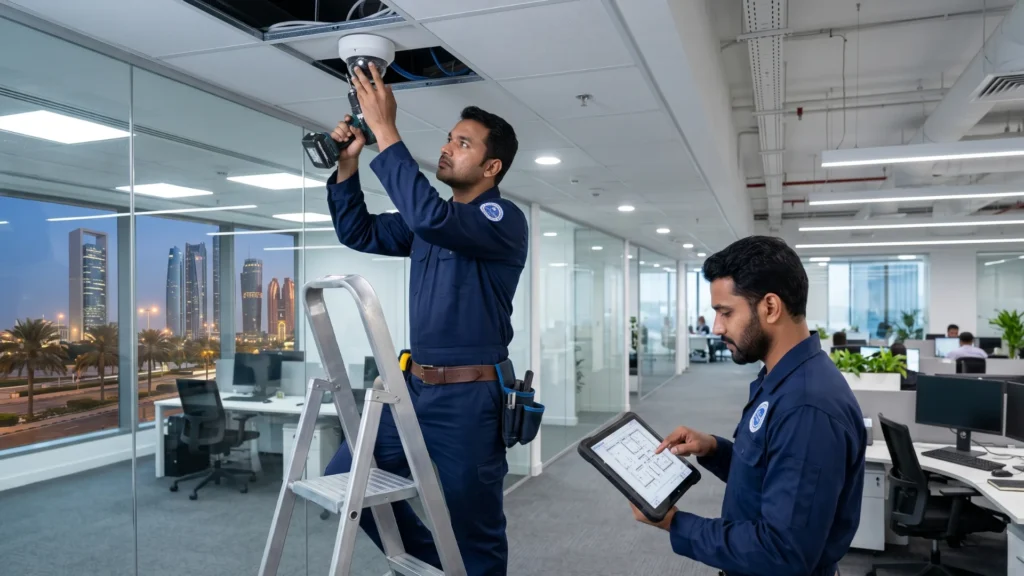
At MYB Advanced Technology Systems, our process for every CCTV project starts with a professional site survey. We walk your premises, map every zone, identify all entry and exit points, and produce a camera layout plan before a single device is purchased.
We then design a system that meets ADMCC requirements for your specific property type and sector, select cameras with the correct resolution and field of view for each position, size your storage to meet the 30-day retention requirement with headroom for future expansion, and handle the full ADMCC approval and submission process on your behalf.
We test and commission every system to the same standards we apply to government facilities. That is why our clients across Abu Dhabi, from retail businesses to institutional projects, consistently pass their ADMCC inspections.
For more information on how we approach surveillance projects, visit our CCTV installation in Abu Dhabi service page.
You can also learn more about the regulatory framework through the Abu Dhabi Digital Authority and the ADMCC official portal.
Frequently Asked Questions About CCTV Camera Requirements in Abu Dhabi
How many CCTV cameras does a small shop need in Abu Dhabi?
A small shop under 100 square metres typically needs between 4 and 8 cameras to comply with ADMCC requirements. The exact number depends on the number of entry points, the layout of the sales floor, and whether there is a back office or storage area that requires coverage.
How Many CCTV Cameras Abu Dhabi Hotels and Restaurants Need
Hotels and restaurants in Abu Dhabi typically require between 12 and 24 cameras depending on the number of floors, dining areas, kitchens, entrances, and car park zones. ADMCC inspectors pay close attention to hospitality venues given the volume of public foot traffic they handle daily.
Does ADMCC require CCTV for all businesses in Abu Dhabi?
ADMCC mandates CCTV for a wide range of commercial properties in Abu Dhabi, including retail shops, restaurants, hotels, clinics, offices, warehouses, and more. The specific requirements vary by sector and property size. If you are unsure whether your business falls under the mandate, our team can advise you.
How long does CCTV footage need to be stored in Abu Dhabi?
ADMCC requires a minimum of 30 days of continuous video retention for most commercial properties. Some regulated sectors, such as financial services and healthcare, may require longer retention periods.
Can I install CCTV myself in Abu Dhabi?
For personal or residential use, self-installation may be acceptable in certain cases. For commercial properties subject to ADMCC requirements, the system must be designed and installed by an approved ELV contractor. Attempting to self-install a commercial system is likely to result in a failed inspection.
What resolution do CCTV cameras need to be in Abu Dhabi?
ADMCC requires a minimum of 2 megapixels for general surveillance cameras. Entry and exit points, where facial identification may be required, often need higher resolution cameras. All cameras must provide clear, usable footage under the lighting conditions present in each zone.
How do I get ADMCC approval for my CCTV system?
The approval process requires you to submit a camera layout plan, equipment specifications, and installation documentation to ADMCC before or after installation, depending on the project type. Working with an ADMCC approved company in Abu Dhabi means this process is handled on your behalf as part of the installation.
What happens if my CCTV system fails an ADMCC inspection?
A failed inspection typically results in a non-compliance notice and a deadline to rectify the issues. In some cases, this can delay trade license renewals. The cost of rectification, including reinstallation and re-inspection, is always significantly higher than getting the system right from the start.
Ready to Find Out Exactly How Many Cameras Your Business Needs?
Every property is different. The most accurate answer to how many CCTV cameras your Abu Dhabi business needs comes from a professional site survey by a qualified, ADMCC-approved team.
MYB Advanced Technology Systems provides free site assessments for commercial properties across Abu Dhabi. We will assess your premises, produce a compliant camera layout, and give you a clear quote with no obligation.
contact our team today and let us take the compliance burden off your plate.